Charitable giving and gifting strategies are often important components of an estate plan, yet they are frequently deferred while attention is focused on foundational planning documents. In this webinar recording, we discuss how charitable and gifting objectives may be incorporated into an overall estate planning strategy and the considerations involved in addressing these goals.
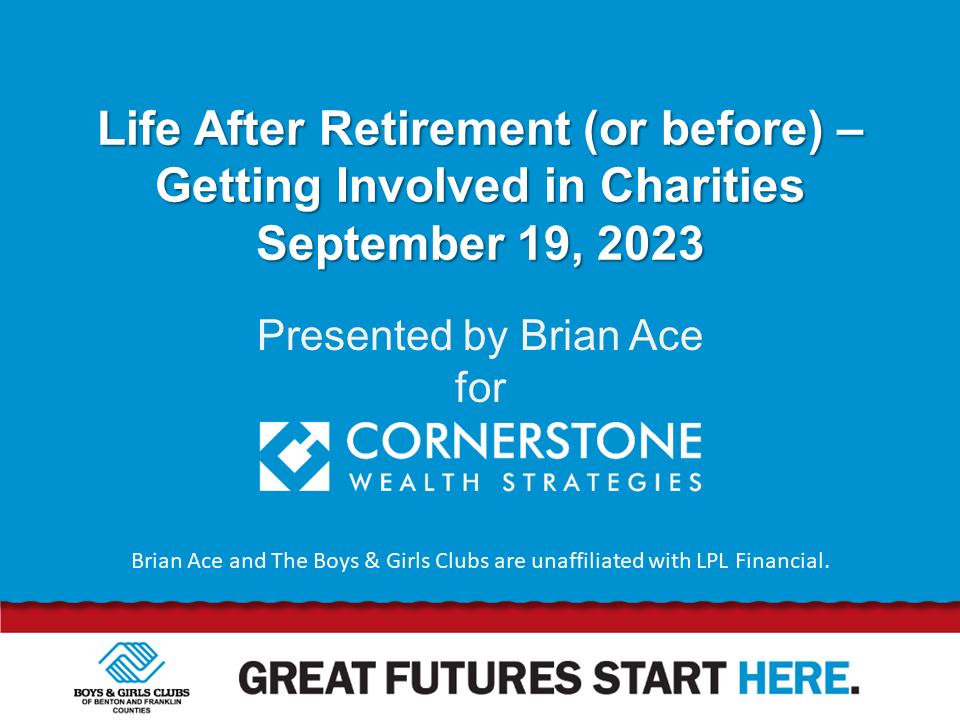
Getting involved with charitable organizations can be one way retirees choose to engage with their communities and support causes they care about. In this webinar recording, Brian Ace, Chief Executive Officer/Executive Director of Boys & Girls Clubs of Benton & Franklin Counties, discusses donor principles, charitable giving concepts, and the ins and outs of nonprofit organizations.

A new tax bill—officially called the “One Big Beautiful Bill Act” (OBBBA)—was recently signed into law, and we wanted to share a …

The end of the year marks the time when many people are doing two things simultaneously. First, they are deciding how much …
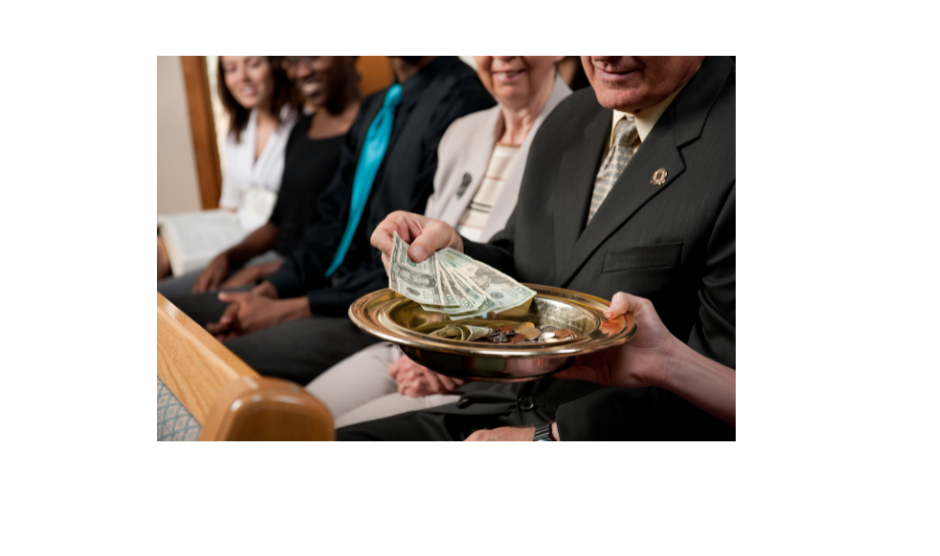
Many people desire to tithe both during life and after death. Accordingly, giving 10% of their estate to their church (or other …
If you're over 70½ and taking required minimum distributions (RMDs), there's a smart way to give to charity and save on taxes. In this quick video, Matt Riesenweber breaks down how Qualified Charitable Distributions (QCDs) let you donate directly from your IRA—reducing your taxable income while still claiming the standard deduction. Learn how to make your generosity go further!

Whether you know it or not, your “estate” is comprised of different assets with different attributes. Some of your assets will be …

If you're approaching retirement, understanding Required Minimum Distributions (RMDs) is essential. In this quick video, Katie Mulhausen explains when and why the IRS requires you to start withdrawing from your retirement accounts, how RMDs are calculated, and what your options are—including how to reduce your tax burden with Qualified Charitable Distributions (QCDs). Get clarity on a key part of retirement planning!

During a lunch with an Executive Director of a local charity that currently qualifies as a tax-exempt 501(c)(3), I heard him remark …